Reported Amazon game controller appears in pictures


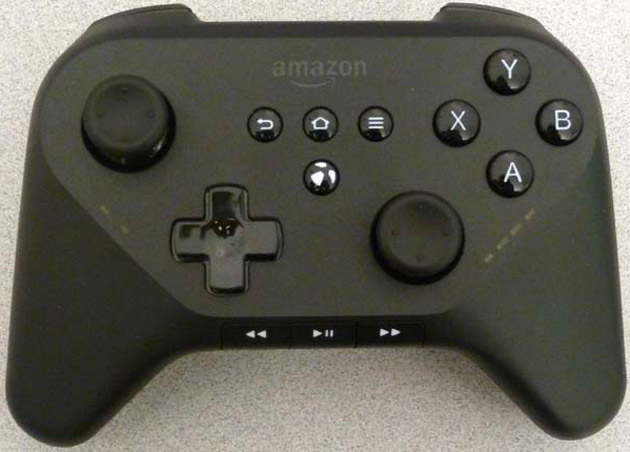
Amazon is probably making a game console, and today we've got a better idea of what that console's controller looks like thanks to Dave Zatz and the Brazilian FCC. The standards are all there: two offset, concave analog sticks, four buttons (A/B/X/Y) on the right front, a d-pad in the lower left, and triggers/shoulder buttons around back/up top. What's weird about this particular controller, however, are the other buttons. A slew of media controls sit at the bottom (play, fast-forward, rewind), and in the middle there are four buttons: Home, Back, Menu ... wait a minute! These are Android buttons! Either Amazon's building a controller for Android or the console it's making is Android-based (we're guessing the latter). Head below for more!


via
Read more

Google.org Opens Its Wallet--A Little

Google.org, Google's philanthropic venture, has started stating its ambitions and placing some of its $2 billion in funding. In keeping with the search giant's style, the initial investments are low and the ambitions are global.
Google.org's five "core initiatives" over the next five to 10 years include identifying infectious diseases and droughts early in their spread; getting information on essential public services to poor populations in developing nations; promoting growth of small- and medium-sized enterprises in the developing world.
Two earlier initiatives, fostering renewable electricity generation at a price cheaper than coal-fired power and promotion of electric vehicles (presumably powered by renewable power) were announced in November .
The initiatives represent a mix of concerns shared by key Google executives and tries to exploit the technical skills the company believes can give it particular impact. "We are trying to rely on things related to Google's core competency, where we can really make a difference," says Sheryl Sandberg, a Google vice president and founding board member of Google.org. "We wanted ideas where we could say, 'If we get this right, it will change the world.' "
The first grants, which amount to approximately $25 million, will not shift the planet or even put a dent in Google.org's grubstake. Five million dollars is going to an organization called InSTEDD (for Innovative Support to Emergencies, Diseases and Disasters), which looks for gaps in information flow among relief and response organizations. Another $2 million has been given to a nongovernmental organization in India called Pratham, which conducts large-scale assessments on the delivery and quality of education to the poor.
There were numerous smaller grants announced in both the disease mapping and social services initiatives, but no investments yet in small businesses or electric vehicles. In November, Google.org announced a $10 million investment in eSolar, a Pasadena, Calif., company working on thermal power from sunlight.
Sandberg and Google.org head Larry Brilliant drew on people they knew from their earlier lives (at, respectively, global health and the U.S. Treasury) to head the corporation's big initiatives.
The push to increase small and medium-sized business in the developing world is headed by Sonal Shah, who came to Google after stints at Goldman Sachs, and earlier in the U.S. Treasury Department, working on development in sub-Saharan Africa, as well as at start-ups in environmental and alternative energy businesses.
"Fifty percent of the gross domestic product in the developed world comes from small and medium-sized businesses, but in the developing world it's just 25%," Shah notes. "We've already met with financial institutions in Kenya, Tanzania and India that want to lend but don't have the tools. We want to lower the transaction costs, find new ways of establishing credit history and create opportunities for exit rounds."
Mark Smolinski, in charge of predicting and preventing disease and drought, knew Brilliant while he was at the Center for Disease Control, and more recently ran research in biological weapons programs at Ted Turner's Nuclear Threat Initiative. That job involved building regional disease surveillance systems in the Mideast, something he now hopes can be built on a global scale. Google, he says, "can build technology to fill information gaps between health ministries, nongovernmental organizations and the private sector."
There have been almost 40 new communicable diseases identified in the last 30 years, he notes, and more will likely arise as a growing world population brings people in closer contact with each other and disease-bearing animals. "Our biggest threat, though, is the lack of an adequate public health workforce," Smolinski says. "Without that, we'll never be able to handle a disease outbreak, so we're very interested in developing that."
Dan W. Reicher, the director of climate change and energy at Google.org, knew Sandberg during the Clinton administration, when he directed $1 billion a year in alternative energy programs at the U.S. Department of Energy. He will probably spend the big bucks at Google.org, too, since his brief involves financing projects between the levels "between the pilot level and a big commercial roll out," where private equity often balks.
"We're talking hundreds of millions, that's what it's going to take," Reicher says. The most promising initiatives near term, he thinks, include solar thermal, high-altitude wind power and deep drilling to tap geothermal power. "We're hiring scientists and deploying capital soon," he says, "with world energy consumption going up so fast, the percent being spent on non-hydro alternatives to fossil fuels is actually going down."
Lant Pritchett, a lecturer in public policy at Harvard, sees his work consulting for Google.org's initiative to better inform and empower poor people in developing nations as "a thin end of the wedge" that will improve the way money already allocated for the poor is spent. "In India, Pratham (an organization Google.org is funding) tested fifth graders on whether they could read. In some places, the kids couldn't even hold the letters up correctly." Since then, he says, the effort has become a national issue, with principals held accountable for their performance.
Google shunned nonprofit status as too restrictive for its philanthropic aims, instead choosing to make both grants and for-profit investments. Each initiative has a director and small staff, but individual budgets are not fixed and may vary widely. Google.org wants competition for ideas and projects, and like Google's core businesses, plans to make future moves based on feedback from earlier investments. In addition, Google.org expects to spend relatively little to promote social services or small business, both of which are geared to more efficiently utilize existing capital and services. Projects like power generation, on the other hand, may cost hundreds of millions of dollars, since Google.org will endeavor to prove engineering concepts by building out power plants.
Executives expect a certain amount of ridicule for their unconventional and risky approach to problem-solving. "A lot (of the initiatives) could fail," says Brilliant. "They are risky and unconventional." They are also designed to break down "false choices," he says, between trade and aid.
Sound cocky? "Of course, you could call us arrogant--it's Google," says one official. "But we're motivated to think big."


via
Read more

Video game sales bounce back strong

The video game business is back and it's booming. And after a long transition to a new generation of game consoles, game software makers are starting to get in on the action.
U.S. retail sales of video game hardware, software and accessories hit a record high of $17.94 billion in 2007, up a staggering 43 percent from 2006, according to data released Thursday by market research firm NPD Group. Software sales, which had been mired in slow growth since 2002, grew 34 percent to $8.64 billion.
In December alone - easily the biggest month of the year for the industry - total sales grew 28 percent to $4.82 billion, while software sales rose 36 percent to $2.37 billion.

"You would think with the economy being what it is, that people would be holding on to more of their cash for a rainy day, but they certainly emptied their wallets for video games this holiday," said Anita Frazier, an analyst at NPD.

Indeed, the good news for the game industry follows reports of disappointingly slow overall retail sales in December. The implication is that consumers are shifting a significant portion of their holiday spending toward video games.

The news is particularly cheery for game software makers such as Electronic Arts, who have seen slowing sales and falling profits thanks to the costly move to new game technology.

Last year was the second strong year in a row for the game industry, after overall sales rose 19 percent last year. But

the growth in 2006 was largely spurred by sales of new hardware. Sony released the PlayStation 3 and Nintendo the Wii in November 2006, and Microsoft released its Xbox 360 in November 2005.

In contrast, this year's growth came across the board. In addition to the growth in sales of software, hardware sales were up 54 percent to $7.04 billion and accessory sales rose 52 percent to $2.26 billion. In fact, each product category hit record sales levels, NPD said.

"The industry (was) bolstered by strong performance in every product category," said Frazier.

In the high-profile console battle, Nintendo was the winner in both December - by a hair - and for the year. Despite the company's ongoing supply problems, U.S. consumers bought 1.35 million Wiis last month.

By comparison, they purchased 1.26 million Xbox 360s and 797,600 PlayStation 3s. Sony sold another 1.1 million PlayStation 2s.

For the year, Nintendo sold 6.29 million Wiis in the U.S., while Microsoft sold 4.62 million Xbox 360s and Sony sold just 2.56 million PlayStation 3s.
But perhaps more stunning was the number of DS handhelds Nintendo sold in December. Consumer bought 2.47 million last month. That's more than twice the 1.06 million PlayStation Portables that Sony sold. Overall, U.S. consumers purchased 8.5 million DSs last year, compared to 3.82 million PSPs.
"Nintendo has certainly been the belle of the hardware ball this year," said Frazier. "The DS has driven portable gaming to a new level."
In terms of software sales, Activision had a big month in December, with three games ranking among the top 10 sellers: "Call of Duty 4" for the Xbox 360 - which was the top selling game overall for the month with 1.47 million copies sold - and both the PlayStation 2 and Xbox 360 versions of "Guitar Hero III."
For the year, the top selling game was Microsoft's "Halo 3," which sold 4.82 million copies. Of the top 10 games for the year, three were for the Xbox 360, three were for the Wii, three were for the PlayStation 2. No game for the PlayStation 3 ranked in the top 10.

via

Read more

Scientists Make First Human Embryo Clones

Scientists at a California company reported yesterday they had created the first mature cloned human embryos from single skin cells taken from adults, a significant advance toward the goal of growing personalized stem cells for patients suffering from various diseases.


Creation of the embryos -- grown from cells taken from the company's chief executive and one of its investors -- also offered sobering evidence that few, if any, technical barriers may remain to the creation of cloned babies. That reality could prompt renewed controversy on Capitol Hill, where the debate over human cloning has died down of late.


Five of the new embryos grew in laboratory dishes to the stage that fertility doctors consider ready for transfer to a woman's womb -- a degree of development that clones of adult humans have never achieved before.


No one knows if those embryos were healthy enough to grow into babies. But the study leader, who is also the medical director of a fertility clinic, said they looked robust, even as he emphasized that he has no interest in cloning people.


"It's unethical and it's illegal and we hope no one else does it either," said Samuel H. Wood, chief executive of Stemagen in La Jolla, whose skin cells were cloned and who led the study with Andrew J. French, the firm's scientific officer.


The closely held company hopes to make embryos that are clones, or genetic twins, of patients, then harvest stem cells from those embryos and grow them into replacement tissues. When transplanted into patients, the tissues would not be rejected because the immune system would see them as "self."


"All our efforts are being directed toward personalized medicine and diseases," said Wood, adding that the scientists did not try to extract stem cells from the first embryos they made because they were focused on proving they could make the clones.


Other stem cell scientists expressed optimism but said they wanted to see the work repeated and more details presented.


"I'd really like to believe it, but I'm not sold yet," said Robert Lanza of Advanced Cell Technology in Worcester, Mass. He said the report did not show the results of molecular tests that scientists typically do to prove that the cloning process was complete. And he and George Daley, a stem cell scientist at Children's Hospital in Boston, said the embryos look only marginally healthy in photos.


The work is the latest evidence, however, that the field is recovering from the scientific and public relations debacle of 2005, when similar claims by Korean scientists proved to have been fabricated. But opponents of research on human embryos lashed out at the approach.


"This study seems to confirm that human cloning . . . is technically possible," said Richard Doerflinger of the U.S. Conference of Catholic Bishops. "It does not show that a viable or normal embryonic stem cell line can be derived this way, or that any such cell has 'therapeutic' value. It does not answer the ethical or social questions about the mass-production of developing human lives in order to destroy them . . . It only tells us that these questions are more urgent than ever."


Other critics noted that scientists in Japan and Wisconsin recently discovered a way to "reprogram" stem cells directly from skin cells, without having to make embryos as a middle step.


via

Read more

VHS camcorder viewfinder hacked into night vision headset


Let's face it -- that VHS camcorder you're still holding on to would probably do you more good as a Salvation Army donation than anything else, but if you've got even a single DIY bone in your person, don't hand it over just yet. The same fellow that brought you the $40 spy glasses is at it once more, this time concocting a night vision "headset" with just a VHS camcorder viewfinder, a dozen ultra-bright LEDs, black / white mini camera and a few other nuts and bolts. After all was said and done, we're left with a device that enables you to easily see in darkness and record your journey. We know, you can't wait to tell your SO how right you were about hanging on to that clunker for one more year, so after you return, click on through for the instructional video and get to work, you hear?


Video
Read more

iPhone putting on a Lotus Notes suit?


If you're looking to gain respect for your gear as a serious business-class tool, there's no better way than to infiltrate those Big Four accounting firms still using Lotus Notes. According to a piece carried by the Associated Press, Lotus Notes eMail is coming to Apple's iPhone and iPod touch. We kid you not. The announcement is expected as early as Sunday the 20th, the day IBM's annual Lotusphere conference kicks off in Orlando. The software is free for those with existing licenses which means IT is going to have a hell of a time keeping it out of users' hands. If true, the application would presumably be the first official, third-party app developed with Apple's new iPhone SDK. IBM is also expected to announce their free Lotus Symphony flavor of OpenOffice for the Mac at the same time. An IBM spokesman seemingly confirmed the announcements by saying that Apple and IBM have, "a lot in common. We're going to cross-pollinate." Let's just hope they manage to untangle that jumbled Notes UI for finger-friendly navigation during the mating ritual, eh?


via

Read more

etflix Watch Instantly and iTunes movie rentals: aiming for two different markets


Quite frankly, it was hard to take Netflix's sudden freeing of its Watch Instantly feature as anything but a response to Apple's forthcoming iTunes movie rentals, but according to a piece at The New York Times, the two are actually aiming at different markets. After speaking with Netflix's Reed Hastings, it was found that the vast majority of its streamable content was "older," and considering that users of this service can never look forward to brand new releases being available, the cost (i.e. free to most mail-in subscribers) makes sense. As for Apple, it's able to focus on crowds who are looking for a more robust, generally fresher selection, but of course, you'll pay the premium each time you indulge. Furthermore, Netflix has yet to make transferring video to any display / device other than your monitor easy, and while an LG STB is indeed on the horizon, the differences in content selection are still likely to lure separate eyes. For more on the how's and why's behind the battle that probably isn't, go on down and tag the read link.


via

Read more

Dell overtakes HP in US sales, HP plans elaborate retaliation


Dell must be doing something right, because according to recent sales figures, the PC maker has topped HP as the number one computer supplier in the States. The Texas-based computer-maker saw sales hit 5.35-million units in the fourth quarter of 2007 (a jump of 15.2-percent over the previous year), while HP came in second with a paltry and embarrassing 4.5-million units shipped. Interestingly, the third and fourth-place slots filled by Apple and Acer swapped hands, with Acer taking the lead due to its recent purchase of Gateway, resulting in a crazy 294.2-percent gain. The increase in numbers of the leader, however, seems to stem from Dell's shift out of direct sales to the sale of systems at retailers like Best Buy and Wal-Mart, though internationally HP still rules the roost, garnering a 19-percent market share worldwide. Of course, if they can overtake in America, Dell can certainly turn it around elsewhere. Watch your back, HP.


via

Read more


Researchers at a US laboratory claim to have created the darkest material ever; a carbon nanotube which is one atom thick and rolled into a cylinder. For an object to be completely black, it must absorb all the colors of light over every angle and wavelength while reflecting none back, and scientists at Rensselaer Polytechnic Institute in Troy, New York, may have just gotten one step closer. The team built an array of vertically aligned, low-density nanotubes -- rough on the surface to minimize reflections -- and then measured the optical properties. They discovered that the objects very good at absorbing light, while downright rotten at reflecting it, thus creating a new standard for "blackness." In practice, their nanotubes could form a super-black object, leading to the creation of more efficient solar panels or solar cells, or more importantly, a Kuro display that goes beyond absolute black. "They've made the blackest material known to science," Says Professor Sir John Pendry, though Shaft's representatives have called for a recount.


via

Read more

Infection alert: Insignia 10.4-inch photo frame kindly bundled with trojan

We haven't exactly gotten a torrent of email complaints from angry Best Buy customers, but for anyone wondering why the $230 Insignia 10.4-inch photo frame got pulled from shelves last week, here's your answer: they were manufactured, like devices sometimes are, with a supposedly "old and easily removed" trojan. Funny, though, that the internal memo we got has Best Buy dragging its feet, intending to send a letter to potentially infected customers only "once a solution has been tested and confirmed." Here's a solution: recall the frames and send everyone some anti-virus software and a free appointment with the Geek Squad, instead of letting sites like ours break the news that Best Buy isn't moving fast to fix its digital security mishaps. The memo is posted after the break.
--snip--
Earlier this month, it came to our attention that some units of the Insignia 10.4-inch digital photo frame (SKU 8483866) have a known Trojan virus. This virus was pre-installed during the manufacturing process. It affects only Windows applications and will only be initiated if the digital picture frame is connected to a PC via a USB cable. Customers who have not connected the digital picture frame to a PC, or those who have updated anti-virus software should be fully protected.
While the virus is old and is easily removed from the picture frame by up-to-date anti-virus software, all units were pulled from shelves the first week of January as a precautionary measure to protect our customers. Those units will be returned via the standard warehouse send back process and the model is now discontinued. Once a solution has been tested and confirmed, a letter will be sent to customers who purchased the product. Geek Squad employees have instructions to resolve the issue in the meantime. If a customer returns one of these units to your store or has questions or concerns about a virus, please direct them to the Geek Squad. Please note: No other Insignia digital picture frame products are affected by this issue.


via

Read more